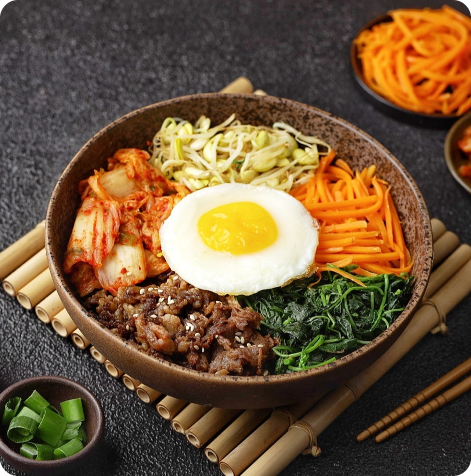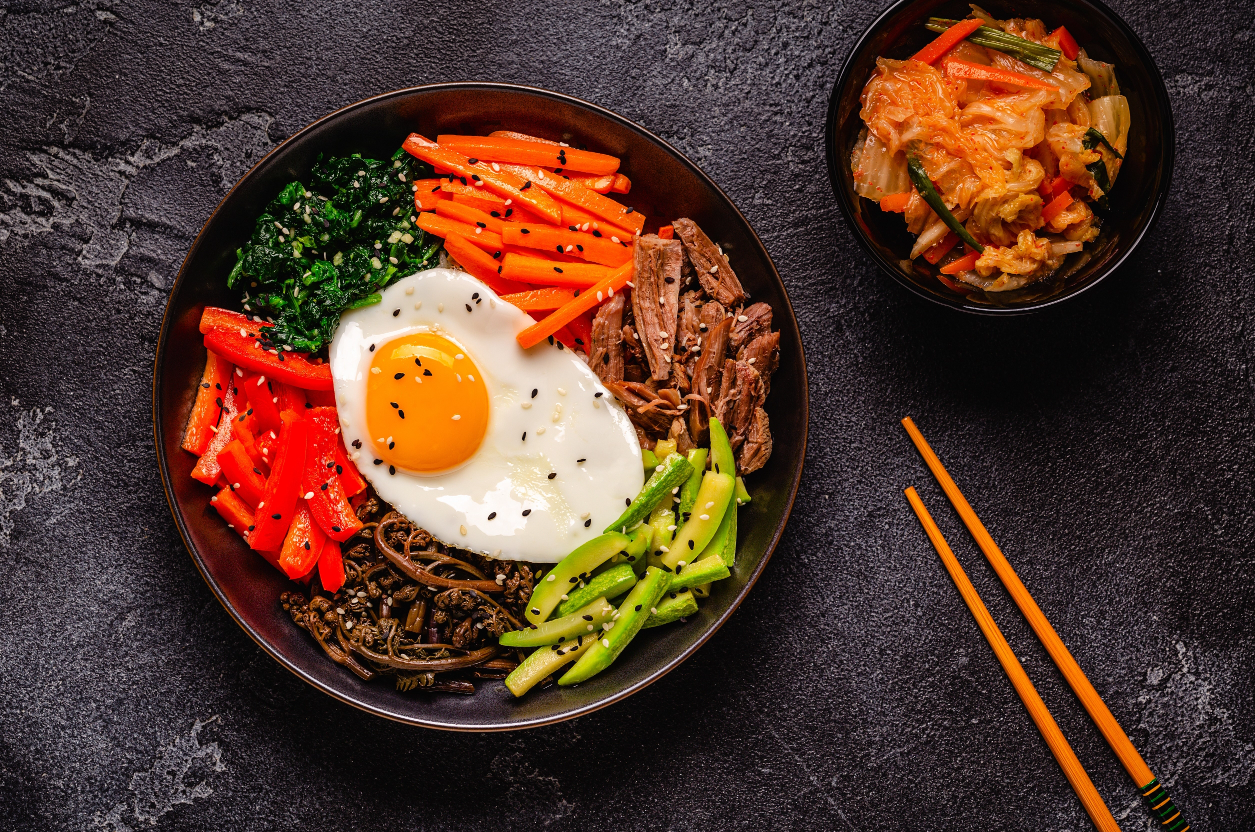


How about a nutritious Bibimbap for lunch?
Bibimbap is deeply rooted in Korean history and culture and, like many famous dishes, has more than one origin story. There are several theories behind its origins and the dish has also, likely, evolved over time.
The term Bibimbap combines two words; ‘Bibim’ meaning ‘mixing ingredients together’ and ‘bap’ meaning ‘rice’. The dish involves a single bowl with a carefully curated mix of rice, vegetables (sautéed, seasoned or raw), meat (typically beef) and a fried egg – topped with a generous dollop of gochujang sauce (a classic Korean chilli sauce which combines sweetness, spiciness, and a hint of umami.)
One popular theory suggests the dish has royal origins dating back to the Joseon Dynasty (1392-1910). During this time it was typical for royal court meals to be served in a very refined way, focusing on balance, nutrition, and colour.